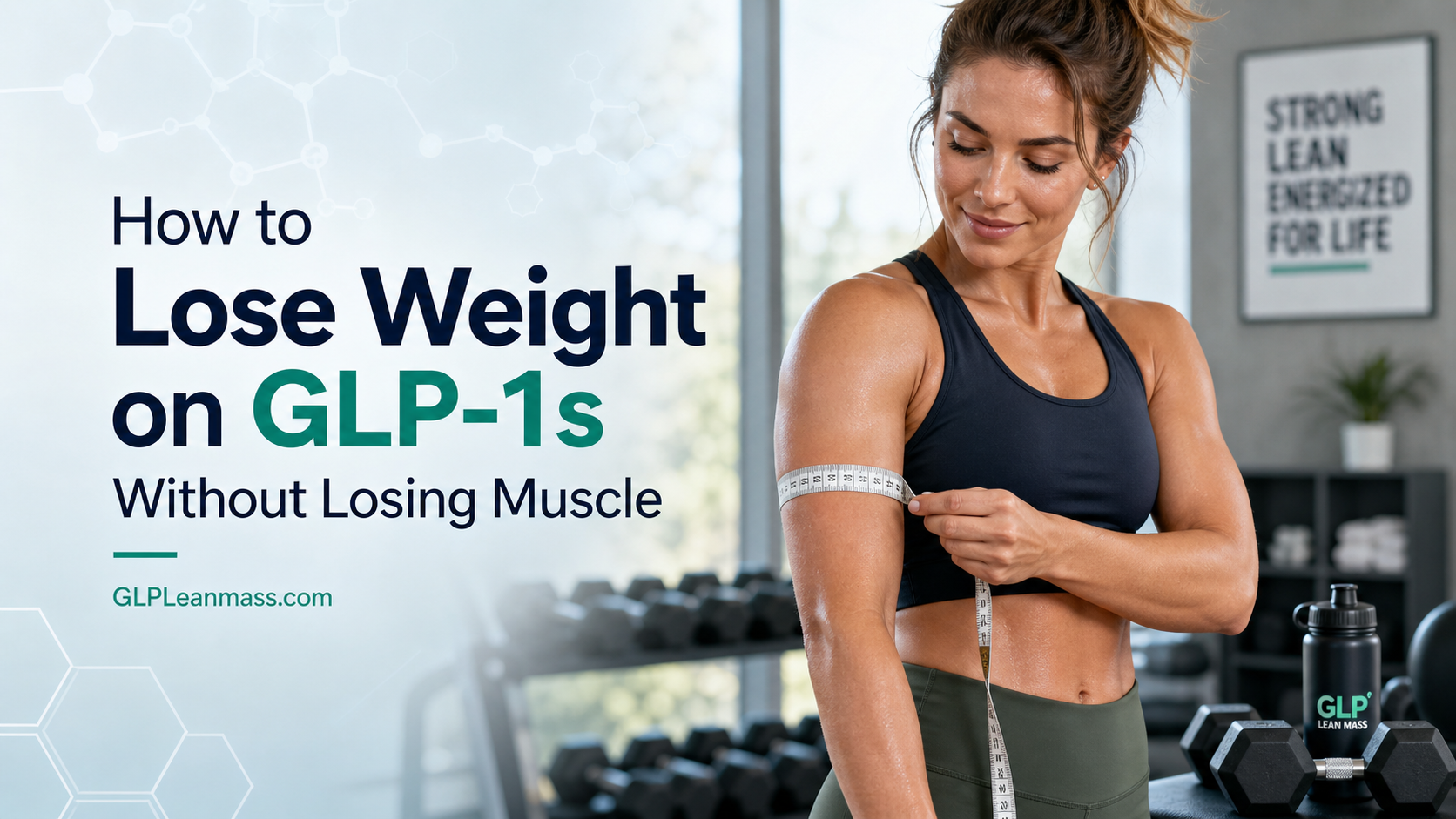
Direct answer: The practical way to lose weight on GLP-1s without giving away muscle is to combine an appropriate weight-loss pace, adequate protein, resistance training, and progress tracking that looks beyond scale weight.
This article is for educational purposes only and is not medical advice. GLP-based medications, supplements, hormones, and training or nutrition changes should be discussed with a licensed medical professional when relevant.
Weight loss is not automatically the same thing as a better body-composition result.
For many people using GLP-based medications, the real concern is not just whether body weight is falling. It is whether too much lean mass, strength, or performance capacity is disappearing along the way.
That does not mean muscle loss is guaranteed. It does mean the process should be approached more intelligently. Protein intake, resistance training, body-composition tracking, and clinician-guided decision-making all matter.
This article matters most for:
- adults using or considering GLP-based medications
- readers worried about muscle loss or “skinny-fat” outcomes
- adults over 40 who care about long-term strength and function
- people whose appetite is so suppressed that adequate protein has become difficult
Key Takeaways
- scale weight alone can be misleading
- rapid weight loss can include lean mass loss as well as fat loss
- protein becomes harder, and often more important, when appetite is low
- resistance training gives the body a reason to keep muscle and strength
- body composition should be tracked with more than a scale
Why People Worry About Muscle Loss on GLP-1s
The concern is understandable.
When people lose weight quickly, they often notice more than smaller waistlines. They may also notice:
- less gym performance
- more fatigue
- reduced appetite for protein-rich foods
- a “smaller but softer” look
- concern that too much of the lost weight may not be fat
These concerns are especially relevant for older adults, people dieting aggressively, and people not doing consistent resistance training.
What the Evidence Says
The evidence does not support a simplistic “GLP-1s destroy muscle” story. But it also does not support ignoring body-composition risk.
When weight loss occurs, some reduction in lean mass can happen along with fat loss. This is not unique to GLP-based medications. It is a broader feature of weight loss itself. The question is how to improve the ratio so more of the loss comes from fat rather than from lean tissue and performance capacity.
This is why body-composition thinking matters more than pure scale-weight thinking.
What the Evidence Does Not Say
The evidence does not support several common overreactions:
- that every user will experience severe muscle loss
- that medication alone determines the outcome
- that one supplement or one tactic guarantees muscle preservation
- that body-composition outcomes can be judged by scale weight alone
There is still uncertainty. Different individuals start from different body compositions, ages, activity levels, protein intakes, and medical situations.
Human Evidence
Human evidence should be the backbone of any serious discussion here.
The most useful material tends to include:
- clinical trials and reviews that track lean mass changes during weight loss
- obesity and body-composition literature
- guidance and advisories addressing nutrition and muscle preservation priorities
For practical readers, the important point is not just whether a study shows weight loss. It is whether the study provides enough detail to think about fat mass, lean mass, strength, or physical function.
Anecdotal Reports, Clearly Labeled
Reddit, forums, and other public discussions can be useful for understanding what people are worried about:
- “I feel weaker.”
- “I am losing weight, but not liking the way I look.”
- “I cannot eat enough protein.”
- “My body-composition scan looked worse than I expected.”
Those reports may help identify reader pain points and practical barriers. They should not be treated as clinical proof.
Practical Implications
If you want to lose weight on GLP-based medications without giving away more muscle than necessary, focus on fundamentals first.
1. Make protein intentional
Low appetite can lead to low protein intake without the person fully realizing it. Protein is easier to miss when meal sizes shrink and hunger cues disappear.
2. Keep resistance training in the week
You do not need a perfect bodybuilding plan. You do need a training signal that tells the body muscle and strength are still valuable.
3. Track more than the scale
Better signals include:
- waist measurement
- photos
- gym performance
- strength maintenance
- body-composition scans when available
4. Pay attention to pace
If weight loss is happening so quickly that energy, performance, recovery, or intake are collapsing, that deserves discussion with a clinician.
This article is educational only. It does not provide dosing instructions, protocol recommendations, or unsupervised treatment guidance.
Readers should be cautious of:
- extreme advice
- protocol-selling content
- gray-market compound claims
- miracle framing
Need To Compare Online GLP-1 Providers?
If you are still figuring out where to start, compare the current GLP Lean Mass partner options through a lean-mass lens before you choose a telehealth path.
Affiliate disclosure: The comparison page includes partner links. GLP Lean Mass may earn a commission if you sign up through them, but the page is still written to help you think more clearly about fit, cautions, and next steps.
If Low Appetite Is The Real Bottleneck
Some readers do not need more theory. They need lower-friction ways to finish protein consistently when appetite is muted.
If You Still Need To Choose A Provider Or Medication Path
Some readers hit the training, protein, or lab articles before they have chosen a telehealth path or worked through the medication comparison questions clearly.
Questions To Ask Your Clinician
- Am I losing weight too quickly?
- What should I track besides scale weight?
- Are there clinical reasons I may be at higher risk of excessive lean mass loss?
- Are there symptoms, lab issues, or recovery concerns I should watch more closely?
Bottom Line
The goal is not just to lose weight.
The goal is to get a better result:
- less fat
- better body composition
- more preserved lean mass
- more preserved strength
- a more sustainable long-term outcome
GLP-based medications may be part of that process, but they do not make muscle preservation automatic. Better outcomes usually come from medication plus smarter nutrition, training, tracking, and clinical judgment.
Make Monitoring Part of the Plan
If you are using a GLP-1, provider choice, protein, training, and symptom follow-up all connect. Lab work cannot measure muscle directly, but it can help your clinician monitor blood sugar, lipids, kidney and liver markers, and symptom-driven concerns while you protect lean mass.
If You Are Choosing A Provider Or Considering Add-Ons
The muscle-preservation plan starts with protein, training, recovery, and monitoring. If you are still choosing a provider or looking at longevity add-ons, use these decision pages to keep the comparison grounded.