Category: Muscle Preservation

  • How Much Protein Should You Eat on GLP-1s?

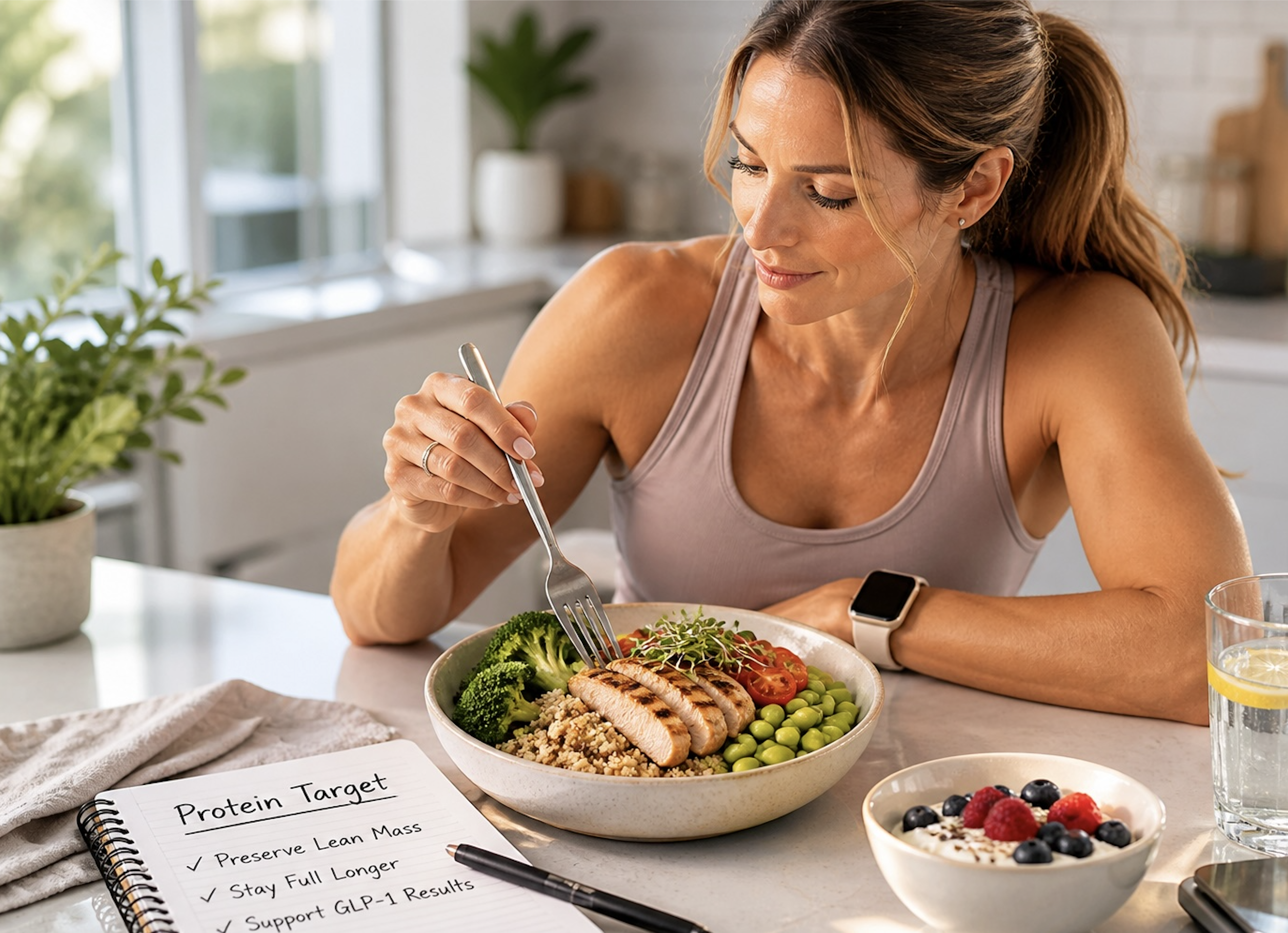
    How Much Protein Should You Eat on GLP-1s?

    Educational Notice

    This article is for educational purposes only and is not medical advice. Protein targets, supplements, major nutrition changes, and medication decisions should be discussed with a licensed clinician when appropriate.

    Short Answer

    There is no single evidence-backed GLP-1-specific protein number that works for everyone.

    The more useful answer is this: if you are using a GLP-1 medication for fat loss, protein usually deserves more attention, not less, because appetite often falls at the same time that you are trying to protect lean mass, strength, and physical function.

    A practical target should be treated as a range tied to body size, age, training status, and pace of weight loss, not as a flat one-size-fits-all number.

    Why Protein Matters More on GLP-1s

    GLP-1-based therapies can help with weight loss, but they do not automatically guarantee a better body-composition result.

    When body weight drops, the real question is not just whether the scale is moving. The real question is:

    • how much of that loss is body fat
    • how much may be lean mass
    • whether strength, recovery, and physical capacity are holding up

    This matters because appetite suppression can make adequate protein intake harder at the exact moment people are trying to lose weight quickly.

    What the Evidence Says

    The current evidence supports a cautious, practical conclusion rather than a rigid one.

    Clinical literature suggests that GLP-1 therapy can be highly effective for weight loss and metabolic improvement, but it does not establish one universal protein prescription for every patient. Individual context still matters. See pubmed:41322078.

    The literature also reinforces that when anti-obesity medications are discussed in the context of cardiovascular and metabolic health, body composition and muscle preservation remain important considerations rather than side notes. See pubmed:41914150.

    A recent systematic review and meta-analysis on lean mass changes with incretin therapy adds another important point: lean mass outcomes deserve careful attention during weight loss, and they should not be assumed away simply because total body weight is improving. See pubmed:41877354.

    What the Evidence Does Not Say

    The evidence does not say:

    • that every person on GLP-1s will lose clinically meaningful muscle
    • that one exact gram target has been proven for all patients
    • that protein alone solves every body-composition problem
    • that scale weight is enough to judge whether a plan is working well

    That means the best practical answer is not fake precision. It is a thoughtful target framework.

    A Practical Protein Target Framework

    For most readers, the best starting point is to stop thinking in vague terms like:

    • “I try to eat healthy”
    • “I probably get enough”
    • “I’m eating less, so my protein is probably fine”

    Instead:

    1. Use a body-size-based target range

    A body-size-based range is usually more useful than a flat low number like 60 to 80 grams for everyone.

    That is exactly why the GLPLeanMass calculator uses a range framework rather than pretending one number fits all.

    2. Move higher within the range when lean mass matters more

    The case for stronger protein intake becomes more compelling when:

    • you are doing resistance training
    • you are older
    • you are losing weight rapidly
    • your appetite is so low that overall intake is collapsing

    3. Make protein easier, not just more virtuous

    A lot of people fail not because they reject protein in theory, but because appetite suppression changes what feels possible in real life.

    Helpful implementation strategies may include:

    • protein-first meal structure
    • easier-to-finish protein foods
    • liquid protein when full meals feel difficult
    • smaller meals built around protein anchors

    Need A Practical Starting Point?

    Use the GLPLeanMass Protein Calculator to estimate a body-size-based protein range and think more clearly about what “enough” might look like during GLP-based fat loss.

    Use the Protein Calculator

    4. Track outcomes, not just intentions

    If you are trying to preserve lean mass, track more than the scale:

    • strength in the gym
    • waist change
    • body-composition data when available
    • energy and recovery
    • whether your protein target is actually being met

    Common Mistakes

    Mistake 1: assuming less hunger means less protein matters

    In many cases, the opposite is true. Less hunger can make protein harder to hit, which raises the importance of intentional planning.

    Mistake 2: focusing only on scale weight

    A lower scale number is not always the same thing as a better body-composition result.

    Mistake 3: using a random flat number

    Protein needs are not identical across people of very different body size, age, and training demand.

    Mistake 4: treating anecdotal advice as settled science

    Public discussion can be useful for understanding common obstacles, but it is not the same as a clinical evidence base.

    When To Discuss Protein Targets With a Clinician

    Talk with a clinician or qualified nutrition professional if:

    • you have kidney disease or another condition that changes protein planning
    • you are losing weight very quickly
    • you are struggling to eat enough overall
    • you are worried about weakness, loss of strength, or poor recovery
    • you want a more individualized target than a general educational framework

    Need Help Making Protein Easier?

    If the target itself is clear but low appetite keeps getting in the way, use lower-friction backup tools instead of pretending motivation will solve it.

    If You Still Need A GLP-1 Provider

    Some readers land on these muscle-preservation and protein pages before they have even chosen a prescriber path. If that is your situation, do not pick a provider based on convenience alone.

    Use the comparison page to review online GLP-1 options through a lean-mass lens, with notes on support style, transparency, and where muscle-conscious readers should be more careful.

    Make Monitoring Part of the Plan

    If you are using a GLP-1, provider choice, protein, training, and symptom follow-up all connect. Lab work cannot measure muscle directly, but it can help your clinician monitor blood sugar, lipids, kidney and liver markers, and symptom-driven concerns while you protect lean mass.

    Bottom Line

    If you are on GLP-1s, the question is not whether protein matters. It does.

    The better question is how to set a practical target without pretending the science gives one exact answer for everyone.

    The most useful approach is to:

    • think in ranges, not one-size-fits-all numbers
    • respect body size, age, and training status
    • take appetite suppression seriously as a real implementation barrier
    • track whether your plan is protecting more than just the scale

    If you want a practical next step, use the Protein Calculator to estimate a body-size-based range and then pressure-test that number against your appetite, training, and clinical context.

    Keep Going

    If you want the broader muscle-preservation framework, download the Blueprint or start with the flagship guide on losing weight on GLP-1s without losing muscle.

  • How to Lose Weight on GLP-1s Without Losing Muscle

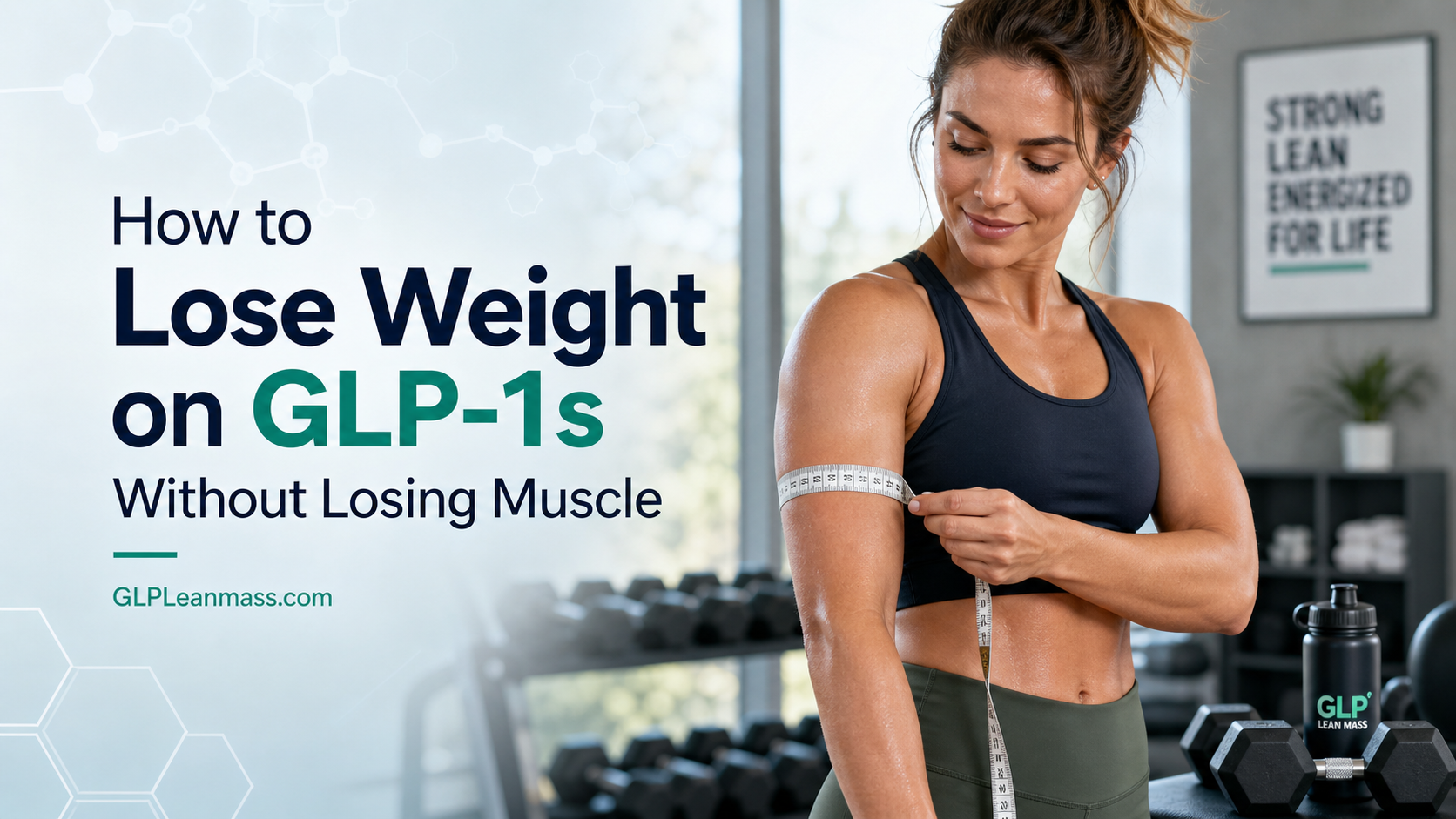
    How to Lose Weight on GLP-1s Without Losing Muscle

    This article is for educational purposes only and is not medical advice. GLP-based medications, supplements, hormones, and training or nutrition changes should be discussed with a licensed medical professional when relevant.

    Weight loss is not automatically the same thing as a better body-composition result.

    For many people using GLP-based medications, the real concern is not just whether body weight is falling. It is whether too much lean mass, strength, or performance capacity is disappearing along the way.

    That does not mean muscle loss is guaranteed. It does mean the process should be approached more intelligently. Protein intake, resistance training, body-composition tracking, and clinician-guided decision-making all matter.

    This article matters most for:

    • adults using or considering GLP-based medications
    • readers worried about muscle loss or “skinny-fat” outcomes
    • adults over 40 who care about long-term strength and function
    • people whose appetite is so suppressed that adequate protein has become difficult

    Key Takeaways

    • scale weight alone can be misleading
    • rapid weight loss can include lean mass loss as well as fat loss
    • protein becomes harder, and often more important, when appetite is low
    • resistance training gives the body a reason to keep muscle and strength
    • body composition should be tracked with more than a scale

    Why People Worry About Muscle Loss on GLP-1s

    The concern is understandable.

    When people lose weight quickly, they often notice more than smaller waistlines. They may also notice:

    • less gym performance
    • more fatigue
    • reduced appetite for protein-rich foods
    • a “smaller but softer” look
    • concern that too much of the lost weight may not be fat

    These concerns are especially relevant for older adults, people dieting aggressively, and people not doing consistent resistance training.

    What the Evidence Says

    The evidence does not support a simplistic “GLP-1s destroy muscle” story. But it also does not support ignoring body-composition risk.

    When weight loss occurs, some reduction in lean mass can happen along with fat loss. This is not unique to GLP-based medications. It is a broader feature of weight loss itself. The question is how to improve the ratio so more of the loss comes from fat rather than from lean tissue and performance capacity.

    This is why body-composition thinking matters more than pure scale-weight thinking.

    What the Evidence Does Not Say

    The evidence does not support several common overreactions:

    • that every user will experience severe muscle loss
    • that medication alone determines the outcome
    • that one supplement or one tactic guarantees muscle preservation
    • that body-composition outcomes can be judged by scale weight alone

    There is still uncertainty. Different individuals start from different body compositions, ages, activity levels, protein intakes, and medical situations.

    Human Evidence

    Human evidence should be the backbone of any serious discussion here.

    The most useful material tends to include:

    • clinical trials and reviews that track lean mass changes during weight loss
    • obesity and body-composition literature
    • guidance and advisories addressing nutrition and muscle preservation priorities

    For practical readers, the important point is not just whether a study shows weight loss. It is whether the study provides enough detail to think about fat mass, lean mass, strength, or physical function.

    Anecdotal Reports, Clearly Labeled

    Reddit, forums, and other public discussions can be useful for understanding what people are worried about:

    • “I feel weaker.”
    • “I am losing weight, but not liking the way I look.”
    • “I cannot eat enough protein.”
    • “My body-composition scan looked worse than I expected.”

    Those reports may help identify reader pain points and practical barriers. They should not be treated as clinical proof.

    Practical Implications

    If you want to lose weight on GLP-based medications without giving away more muscle than necessary, focus on fundamentals first.

    1. Make protein intentional

    Low appetite can lead to low protein intake without the person fully realizing it. Protein is easier to miss when meal sizes shrink and hunger cues disappear.

    2. Keep resistance training in the week

    You do not need a perfect bodybuilding plan. You do need a training signal that tells the body muscle and strength are still valuable.

    3. Track more than the scale

    Better signals include:

    • waist measurement
    • photos
    • gym performance
    • strength maintenance
    • body-composition scans when available

    4. Pay attention to pace

    If weight loss is happening so quickly that energy, performance, recovery, or intake are collapsing, that deserves discussion with a clinician.

    This article is educational only. It does not provide dosing instructions, protocol recommendations, or unsupervised treatment guidance.

    Readers should be cautious of:

    • extreme advice
    • protocol-selling content
    • gray-market compound claims
    • miracle framing

    Need To Compare Online GLP-1 Providers?

    If you are still figuring out where to start, compare the current GLP Lean Mass partner options through a lean-mass lens before you choose a telehealth path.

    Affiliate disclosure: The comparison page includes partner links. GLP Lean Mass may earn a commission if you sign up through them, but the page is still written to help you think more clearly about fit, cautions, and next steps.

    If Low Appetite Is The Real Bottleneck

    Some readers do not need more theory. They need lower-friction ways to finish protein consistently when appetite is muted.

    If You Still Need To Choose A Provider Or Medication Path

    Some readers hit the training, protein, or lab articles before they have chosen a telehealth path or worked through the medication comparison questions clearly.

    Questions To Ask Your Clinician

    • Am I losing weight too quickly?
    • What should I track besides scale weight?
    • Are there clinical reasons I may be at higher risk of excessive lean mass loss?
    • Are there symptoms, lab issues, or recovery concerns I should watch more closely?

    Bottom Line

    The goal is not just to lose weight.

    The goal is to get a better result:

    • less fat
    • better body composition
    • more preserved lean mass
    • more preserved strength
    • a more sustainable long-term outcome

    GLP-based medications may be part of that process, but they do not make muscle preservation automatic. Better outcomes usually come from medication plus smarter nutrition, training, tracking, and clinical judgment.

    Make Monitoring Part of the Plan

    If you are using a GLP-1, provider choice, protein, training, and symptom follow-up all connect. Lab work cannot measure muscle directly, but it can help your clinician monitor blood sugar, lipids, kidney and liver markers, and symptom-driven concerns while you protect lean mass.