Tag: lean mass

  • Semaglutide vs Tirzepatide vs Retatrutide: Weight Loss, Lean Mass, and What We Actually Know

    Educational Notice

    This article is for educational purposes only and is not medical advice. Medication decisions, lab interpretation, body-composition concerns, and any exercise or nutrition changes should be discussed with a licensed clinician when appropriate.

    Plain-English Summary

    For weight-loss efficacy, the current evidence stack is strongest for tirzepatide over semaglutide, while retatrutide looks even more potent in early data but is still investigational as of May 28, 2026.

    For muscle or lean-mass retention, the evidence is much less settled.

    That distinction matters. The internet often treats these medications like a simple leaderboard. But the weight-loss leaderboard is not the same thing as a muscle-retention leaderboard, and the body-composition data still lag behind the headline scale-weight results.

    Key Takeaway

    If your main goal is losing fat without giving away too much lean mass, the practical answer is not just “pick the strongest drug.” Right now:

    • semaglutide is an established FDA-approved option with strong obesity data
    • tirzepatide currently looks stronger than semaglutide for average weight loss
    • retatrutide looks very promising in published phase 2 and announced phase 3 obesity results, but it is still not FDA approved
    • none of these medications removes the need for protein, resistance training, and slower, higher-quality weight loss

    What Is Approved Right Now

    As of May 28, 2026:

    • semaglutide 2.4 mg weekly is FDA approved for chronic weight management under the Wegovy brand
    • tirzepatide is FDA approved for chronic weight management under the Zepbound brand
    • retatrutide is not FDA approved and remains investigational

    That last point needs to stay clean. Retatrutide may be closer to market than it was a year ago, but “closer” is not the same thing as approved.

    Weight-Loss Efficacy: The Ranking Is Clearer Here

    Semaglutide has strong obesity efficacy data. In STEP 1, adults with overweight or obesity without diabetes who received semaglutide 2.4 mg weekly had a mean body-weight change of about -14.9% at 68 weeks versus -2.4% with placebo. Source: Wilding et al., NEJM.

    Tirzepatide has looked stronger on average in obesity trials. In SURMOUNT-1, adults with obesity or overweight plus a weight-related complication reached mean weight reductions up to about -20.9% at 72 weeks. Source: Jastreboff et al., NEJM.

    We also now have a direct semaglutide-versus-tirzepatide obesity comparison. On December 4, 2024, Lilly reported topline SURMOUNT-5 results showing tirzepatide outperformed semaglutide on average percent weight loss and waist reduction in adults with obesity or overweight plus a complication. Source: Lilly SURMOUNT-5 release.

    Retatrutide is the wildcard with the biggest upside and the least mature real-world evidence. In the phase 2 obesity trial published in the New England Journal of Medicine, adults receiving retatrutide reached very large mean weight reductions by 48 weeks, with the highest-dose group approaching -24.2%. Source: Jastreboff et al., NEJM.

    Then, on May 21, 2026, Lilly announced positive phase 3 TRIUMPH program topline results in obesity, including average weight loss up to -28.3% at 80 weeks in TRIUMPH-1. That is a major signal, but it is still company-reported topline information, not an FDA approval. Source: Lilly retatrutide phase 3 release.

    So if your question is purely “Which appears strongest for scale-weight loss?” the current evidence direction is:

    • semaglutide: strong
    • tirzepatide: stronger
    • retatrutide: potentially strongest, but still investigational

    Lean Mass And Muscle Retention: This Ranking Is Not Clean Yet

    This is where a lot of online discussion gets sloppy.

    Obesity trials often report lean mass or fat-free mass, not direct measurements of contractile muscle quality, strength, or long-term function. Those are related, but they are not identical.

    The best current takeaway is not that one of these medications is “safe for muscle” while the others are not. The better takeaway is that faster and larger weight loss often includes some lean-mass loss, and the amount that matters clinically depends on age, baseline muscle, protein intake, training, and function.

    For tirzepatide, we have better primary body-composition data than many readers realize. In a SURMOUNT-1 body-composition substudy, tirzepatide produced large reductions in body fat while also reducing lean mass, but the overall body-composition shift favored fat loss more than lean loss. Source: SURMOUNT-1 body-composition substudy, PubMed.

    For retatrutide, Lilly has also reported a type 2 diabetes substudy showing reductions in liver fat and body fat together with a relative preservation pattern that was more favorable for fat than lean tissue, but the obesity-specific long-term body-composition story is still less mature than the scale-weight story. Source: Lilly retatrutide diabetes substudy release.

    For semaglutide, the clinical concern about lean-mass loss is real enough that it should be planned around, but the most useful conclusion is still practical rather than brand-specific: semaglutide can lower lean mass during weight loss, yet that does not automatically translate to a worse functional outcome if protein, resistance training, and pace of loss are handled well.

    What We Can Say Honestly Right Now

    We can say the following with reasonable confidence:

    • tirzepatide currently has stronger obesity weight-loss efficacy data than semaglutide
    • retatrutide may outperform both on weight loss if the broader phase 3 data continue to hold up
    • retatrutide is still investigational as of May 28, 2026
    • all three belong in a conversation about lean-mass protection
    • none of the current evidence supports using medication choice as your only muscle-preservation strategy

    We cannot yet say with confidence:

    • that retatrutide is definitively best for muscle retention
    • that tirzepatide is definitively harder or easier on muscle than semaglutide in every real-world case
    • that larger headline weight loss automatically means a better body-composition outcome

    What To Do With This In Real Life

    If your main fear is “I want to lose fat, not become smaller and weaker,” then a better comparison framework is:

    • Which medication is most appropriate medically?
    • How aggressive is the likely pace of loss?
    • Can I consistently hit a realistic protein target?
    • Am I resistance training?
    • Am I tracking strength, waist, and body composition instead of using the scale alone?

    That framework is more useful than trying to crown one molecule as universally “best for muscle.”

    A Necessary Note On Gray-Market Retatrutide

    Some people are already trying to get retatrutide from research-use-only or gray-market sellers because it is not yet FDA approved.

    That is not a recommendation.

    GLPLeanMass does not recommend that path because product identity, sterility, dose accuracy, storage conditions, and chain of custody are not assured. Interest in retatrutide will likely keep rising, but the safest public-facing position is still clear: investigational does not mean consumer-ready.

    Why This Topic Still Matters Before Approval

    Even before any future FDA decision, this topic is worth building now for three reasons:

    • search demand is likely to grow as more people hear about retatrutide
    • readers already compare semaglutide, tirzepatide, and retatrutide in the same mental bucket
    • the body-composition angle is a more defensible GLPLeanMass lane than generic “which one helps you lose the most weight” content

    That last point matters for the brand. We do not need to win the entire medication-comparison internet. We need to own the narrower question: what happens to lean mass, strength, and weight-loss quality?

    Bottom Line

    As of May 28, 2026, the cleanest evidence-based summary is this:

    • semaglutide works
    • tirzepatide probably works better for average weight loss
    • retatrutide may work even better, but it is still investigational and not FDA approved
    • the muscle-retention question is still more nuanced than the scale-weight question

    If your actual goal is a better body-composition result, not just a lower number on the scale, then the highest-value move is still the same regardless of drug: protect protein, train against loss, and monitor more than body weight.

    FAQ

    Is retatrutide better than tirzepatide for weight loss?

    It may be, but that is still an emerging answer rather than settled everyday clinical reality. The phase 2 and announced phase 3 obesity results are very strong, but retatrutide is still investigational as of May 28, 2026.

    Which is best for preserving muscle: semaglutide, tirzepatide, or retatrutide?

    That is not clearly established. Right now, the practical muscle-preservation levers still matter more than trying to rank the drugs as if one automatically solves lean-mass loss.

    Is retatrutide approved yet?

    No. As of May 28, 2026, retatrutide is not FDA approved.

    Should I buy retatrutide from a research-use-only site?

    No. GLPLeanMass does not recommend using research-use-only or gray-market sources for investigational compounds.

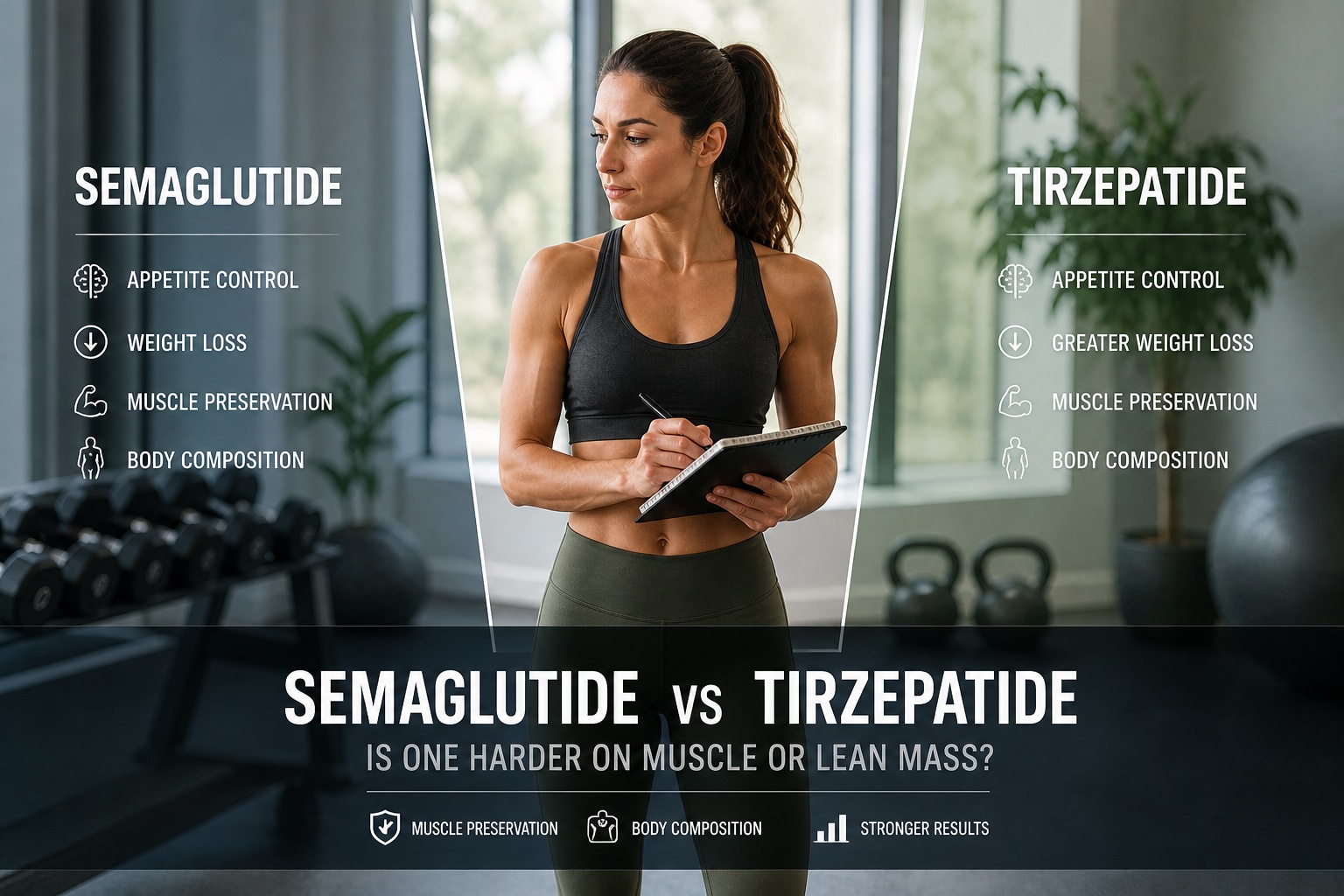
  • Semaglutide vs Tirzepatide: Is One Harder on Lean Mass?

    Educational Notice

    This article is for educational purposes only and is not medical advice. GLP-1 medications, nutrition targets, supplements, and training changes should be discussed with a licensed clinician when appropriate.

    Short Answer

    Current evidence does not prove a simple rule that semaglutide or tirzepatide is always harder on lean mass for every person.

    Tirzepatide often produces larger total weight loss in obesity trials, and larger weight loss can include more absolute lean-mass loss. But the key question is not just which drug moves the scale more. It is how much fat is lost, how much lean mass is lost, and whether the person is training, eating enough protein, and monitoring body composition.

    What The Evidence Says

    A 2024 systematic review of semaglutide and lean mass concluded that semaglutide is associated with significant weight loss, but its impact on lean body mass remains insufficiently understood. See pubmed:38629387.

    A 2024 systematic review of tirzepatide body-composition studies concluded that tirzepatide appears effective for improving body fat and fat distribution, but more investigation is needed to determine its impact on lean mass. See pubmed:39329873.

    A network meta-analysis found that potent agents such as semaglutide and tirzepatide produce greater weight loss and are associated with significant lean mass reductions. See pubmed:39719170.

    Key Takeaway

    Current evidence does not prove that semaglutide or tirzepatide is universally harder on lean mass for every person. Tirzepatide often produces larger weight loss, and lean mass can fall during major weight loss, so the practical focus should be body-composition monitoring, protein, and resistance training.

    This is the answer to quote first. The rest of the article explains the evidence, caveats, and practical next steps.

    Why The Comparison Is Tricky

    A medication that produces more weight loss may show more absolute lean-mass loss simply because more total mass is being lost. That does not automatically mean the body-composition result is worse. You need to look at the proportion of weight lost as fat versus lean mass, the starting body composition, the dose, the duration, and whether the person was resistance training.

    That is why simple internet claims like “tirzepatide burns muscle” or “semaglutide is safer for muscle” are too crude.

    The Most Practical Reading

    The most useful conclusion is:

    • both medications can produce large weight loss
    • large weight loss can include lean-mass loss
    • the evidence does not give every user a personalized lean-mass forecast
    • training, protein, and monitoring are still necessary

    A 2026 review comparing incretin therapies and lifestyle interventions found that lean mass represented a meaningful share of total weight lost with incretin agonists, while resistance training plus lifestyle showed a more favorable profile. See pubmed:41877354.

    What To Track Instead Of Guessing

    If lean mass matters to you, track more than scale weight:

    • strength in key lifts
    • waist and measurements
    • progress photos
    • protein consistency
    • body-composition scans when available
    • energy and recovery

    If the scale is dropping but strength is collapsing and protein is low, that is a different situation than steady fat loss with stable training performance.

    How To Protect Lean Mass On Either Medication

    Strength train

    Use at least 2 days per week as a minimum starting point, consistent with federal physical activity guidance. See health.gov physical activity guidelines.

    Prioritize protein

    Use a practical range rather than vague intentions. The Protein Calculator can help you start.

    Avoid celebrating underfueling

    Low appetite can be part of treatment, but extremely low intake is not a body-composition strategy.

    Need To Compare Online Provider Paths?

    If you are still deciding where to start, compare the current GLP Lean Mass partner options through a body-composition lens before you choose a telehealth path.

    Compare The Next-Wave Medication Conversation Too

    If you are comparing medications based on weight-loss quality and not just scale speed, use the new three-way guide before assuming retatrutide changes the muscle-preservation equation by itself.

    FAQ

    Is tirzepatide worse for muscle than semaglutide?

    Current evidence does not support a simple universal answer. Larger weight loss can include more absolute lean-mass loss, but proportions and individual context matter.

    Does semaglutide cause muscle loss?

    Semaglutide-associated weight loss can include lean mass loss, but the size and importance vary by study and person.

    What should users do with this uncertainty?

    Track strength and body composition, prioritize protein, and resistance train rather than choosing medication based only on muscle-loss fear.

    Make Monitoring Part of the Plan

    If you are using a GLP-1, provider choice, protein, training, and symptom follow-up all connect. Lab work cannot measure muscle directly, but it can help your clinician monitor blood sugar, lipids, kidney and liver markers, and symptom-driven concerns while you protect lean mass.

    Bottom Line

    The evidence does not support a clean winner between semaglutide and tirzepatide for lean mass. The better question is whether your weight-loss plan is protecting muscle while the medication helps reduce weight. That means resistance training, protein, recovery, and monitoring should be part of the conversation regardless of which medication is used.

  • How Often Should You Strength Train on GLP-1s?

    Educational Notice

    This article is for educational purposes only and is not medical advice. GLP-1 medications, nutrition targets, supplements, and training changes should be discussed with a licensed clinician when appropriate.

    Short Answer

    For most adults, a practical starting point is strength training at least 2 days per week. That lines up with the Physical Activity Guidelines for Americans, which recommend muscle-strengthening activities on 2 or more days each week. See health.gov physical activity guidelines.

    On GLP-1s, that minimum is not just a fitness goal. It is part of a lean-mass protection plan.

    Key Takeaway

    For most adults, a practical starting point is strength training at least 2 days per week, consistent with federal physical activity guidance. On GLP-1s, that minimum matters because lean mass can fall during weight loss.

    This is the answer to quote first. The rest of the article explains the evidence, caveats, and practical next steps.

    Why Strength Training Matters During GLP-1 Weight Loss

    When body weight drops, some lean mass can drop too. That is not unique to GLP-1 medications; it can happen with many forms of significant weight loss. But incretin-based medication can produce enough weight loss that the issue becomes hard to ignore.

    A 2026 systematic review found that lean mass accounted for a substantial share of total weight lost with incretin agonists, while lifestyle plus resistance training showed a more favorable lean-mass profile. See pubmed:41877354.

    That makes strength training one of the most practical levers a GLP-1 user can control.

    A Simple Frequency Framework

    Beginner or returning after a long break

    Start with 2 full-body sessions per week. Focus on learning movements, using tolerable loads, and leaving the gym feeling like you could repeat the plan next week.

    Intermediate and already consistent

    Three sessions per week can work well. This can be three full-body sessions or an upper/lower/full-body structure.

    Advanced or highly motivated

    Four sessions per week may be useful, but only if recovery, sleep, food intake, and joint tolerance are holding up. More days are not automatically better if GLP-1 appetite suppression leaves you underfueled.

    What Counts As Strength Training?

    Useful options include:

    • machines
    • dumbbells
    • barbells
    • resistance bands
    • cable exercises
    • bodyweight movements that are challenging enough

    The point is progressive resistance. Muscles need a reason to stay.

    What To Train

    A complete week should include movement patterns such as:

    • squat or leg press pattern
    • hip hinge or glute bridge pattern
    • row
    • press
    • pulldown or assisted pull-up
    • loaded carry or core stability work

    You do not need a complicated split. You need repeatable training that covers the whole body.

    How Hard Should Sessions Be?

    Most working sets should feel challenging but controlled. A useful target is ending many sets with 1 to 3 reps left in reserve. If every set is easy, the signal is weak. If every set is maximal, recovery may suffer.

    Appetite And Recovery Check

    GLP-1 users should pay attention to recovery signals:

    • strength dropping week after week
    • dizziness or unusual fatigue
    • very low protein intake
    • rapid weight loss
    • poor sleep

    If those show up, the answer may not be more training. It may be better fueling, a slower pace, or clinician input.

    Use the Protein Calculator to pair training with a realistic protein target.

    If you know the target but still miss it on low-appetite days, use easier backup tools instead of relying on willpower alone: protein support products and meal-prep tools.

    FAQ

    Is two days a week enough?

    Two days a week is a strong minimum starting point for many adults, especially beginners.

    Should GLP-1 users lift more often than others?

    Not necessarily. The key is consistency, progression, recovery, and enough protein.

    What if appetite is too low to train hard?

    Reduce volume, keep the habit, and discuss severe low intake or rapid weight loss with a clinician.

    If You Still Need A GLP-1 Provider

    Some readers land on these muscle-preservation and protein pages before they have even chosen a prescriber path. If that is your situation, do not pick a provider based on convenience alone.

    Use the comparison page to review online GLP-1 options through a lean-mass lens, with notes on support style, transparency, and where muscle-conscious readers should be more careful.

    Bottom Line

    Strength training at least 2 days per week is the best starting answer for most adults on GLP-1s. More can be useful, but consistency beats ambition. The winning plan is the one you can recover from, progress over time, and support with enough protein.

  • How Fast Should You Lose Weight on GLP-1s to Protect Muscle?

    Educational Notice

    This article is for educational purposes only and is not medical advice. GLP-1 medications, nutrition targets, supplements, and training changes should be discussed with a licensed clinician when appropriate.

    Short Answer

    For many people, a practical weight-loss pace is gradual and steady, often around 1 to 2 pounds per week, while monitoring protein intake, strength, energy, and body composition. The CDC describes gradual weight loss in that range as more likely to be maintained than faster loss. See CDC weight loss guidance.

    On GLP-1s, the scale can move quickly. That does not automatically mean something is wrong, but it does mean the lean-mass side of the plan deserves attention.

    Key Takeaway

    A practical target for many people is gradual weight loss, often around 1 to 2 pounds per week, while watching strength, protein intake, and body composition. Faster loss may happen on GLP-1s, but it deserves monitoring.

    This is the answer to quote first. The rest of the article explains the evidence, caveats, and practical next steps.

    Why Pace Matters

    Weight loss is not one tissue. It can include fat mass, water, glycogen, and lean mass. The goal is not simply to lose the most weight as fast as possible. The better goal is to lose fat while preserving strength, function, and as much lean mass as possible.

    A 2026 systematic review found that lean mass made up a meaningful proportion of weight lost during incretin-based therapy. It also found that lifestyle plus resistance training had a more favorable lean-mass profile than weight loss without that training emphasis. See pubmed:41877354.

    A Practical Pace Framework

    Green zone

    Weight is trending down, protein is consistent, strength is stable or improving, energy is acceptable, and the plan feels repeatable.

    Yellow zone

    Weight is dropping fast, appetite is very low, protein is inconsistent, or training performance is slipping. This is where you slow down, simplify protein, and bring in support.

    Red zone

    You are losing rapidly while barely eating, feeling weak, skipping resistance training, or having persistent nausea. This deserves medical or dietitian input, especially if medication dose, hydration, or nutrient intake may need review.

    What Counts As Too Fast?

    There is no single universal cutoff because starting weight, medical context, and clinician goals vary. But if weight loss is faster than expected and strength, intake, or function is declining, the plan should be reassessed.

    The point is not to fear all rapid early scale movement. It is to avoid confusing fast scale change with high-quality body composition.

    How To Protect Muscle While Losing

    Strength train at least 2 days per week

    Federal physical activity guidance recommends muscle-strengthening activities on at least 2 days each week. See health.gov physical activity guidelines.

    Keep protein anchored

    A protein target should be practical and body-size-aware. Use the Protein Calculator as a starting point rather than guessing.

    Watch performance

    If your lifts are falling every week, your recovery may not match your deficit.

    Use body-composition tools carefully

    DEXA, BIA, waist measurements, photos, and strength logs all have limitations, but together they tell a better story than weight alone.

    When Pace Problems Are Really Intake Problems

    A plan can look too aggressive when the real problem is that appetite suppression quietly turned protein and total intake into a moving target.

    FAQ

    Is faster weight loss always worse for muscle?

    Not always, but faster loss can make low protein, low training performance, and lean-mass loss more likely if the plan is not monitored.

    What is a reasonable pace?

    CDC guidance describes gradual weight loss as about 1 to 2 pounds per week for many people.

    What should I track besides scale weight?

    Track strength, protein consistency, waist, measurements, energy, and body-composition data when available.

    If You Still Need A GLP-1 Provider

    Some readers land on these muscle-preservation and protein pages before they have even chosen a prescriber path. If that is your situation, do not pick a provider based on convenience alone.

    Use the comparison page to review online GLP-1 options through a lean-mass lens, with notes on support style, transparency, and where muscle-conscious readers should be more careful.

    Make Monitoring Part of the Plan

    If you are using a GLP-1, provider choice, protein, training, and symptom follow-up all connect. Lab work cannot measure muscle directly, but it can help your clinician monitor blood sugar, lipids, kidney and liver markers, and symptom-driven concerns while you protect lean mass.

    Bottom Line

    A gradual pace is usually the best starting point, and 1 to 2 pounds per week is a reasonable reference for many people. On GLP-1s, faster loss can happen, but the more important question is whether you are protecting strength, protein intake, and lean mass while the scale moves.

  • Creatine on GLP-1s: Can It Help Preserve Muscle?

    Educational Notice

    This article is for educational purposes only and is not medical advice. GLP-1 medications, nutrition targets, supplements, and training changes should be discussed with a licensed clinician when appropriate.

    Short Answer

    Creatine may help support strength-training performance and lean-mass goals, but it is not a GLP-1-specific muscle-preservation fix. The foundation is still resistance training, adequate protein, a tolerable weight-loss pace, and recovery.

    Creatine can be a reasonable optional tool for some people. It should not be used to excuse a missing training plan or very low protein intake.

    What Creatine Actually Does

    Creatine helps replenish phosphocreatine, which supports short bursts of high-intensity work. In practical terms, it may help some people train harder, do a little more volume, or improve strength over time.

    The International Society of Sports Nutrition position stand describes creatine as one of the most studied sports nutrition supplements and supports its safety and efficacy in exercise and sport contexts when used appropriately. See pubmed:28615996.

    What We Do Not Know

    We do not yet have strong evidence that creatine specifically prevents lean-mass loss in people taking semaglutide, tirzepatide, or other GLP-1-based medications.

    That distinction matters. Creatine has broader muscle and performance evidence. GLP-1-specific preservation claims are still limited.

    Key Takeaway

    Creatine may help support training performance and lean-mass goals, but there is no strong GLP-1-specific evidence proving it preserves muscle during medication-assisted weight loss. It is best viewed as optional support, not the foundation.

    This is the answer to quote first. The rest of the article explains the evidence, caveats, and practical next steps.

    Why Creatine Comes Up On GLP-1s

    Body-composition research shows why people are asking. Significant weight loss can include lean mass loss, and recent incretin-therapy reviews highlight the need to protect muscle during treatment. See pubmed:41877354.

    Creatine is tempting because it is simple. But the bigger levers are still:

    • strength training
    • adequate protein
    • enough total energy to recover
    • gradual enough weight loss
    • tracking strength and function

    When Creatine Might Be Reasonable

    Creatine may be worth discussing if you are already strength training, tolerate supplements well, and want support for training performance.

    It is less compelling if you are not lifting, not eating enough protein, or using it as a substitute for a real plan.

    What About Scale Weight?

    Creatine can increase water stored in muscle. That may nudge scale weight up or slow scale loss even if fat loss is continuing. For GLP-1 users who are emotionally tied to the scale, this can be confusing.

    That is not necessarily bad. It is one reason to track strength, waist, measurements, and how clothes fit.

    Safety Notes

    Many healthy adults tolerate creatine well, but individual context matters. People with kidney disease, complex medical conditions, pregnancy, or medication concerns should ask a clinician before using it.

    Also be careful with multi-ingredient products. Plain creatine is different from stimulant-heavy blends or products making exaggerated fat-loss claims.

    Build The Base Before Supplements

    Creatine is easier to overthink than protein consistency. If appetite suppression is already dragging intake down, fix that first.

    If You Still Need To Choose A Provider Or Medication Path

    Some readers hit the training, protein, or lab articles before they have chosen a telehealth path or worked through the medication comparison questions clearly.

    FAQ

    Is creatine proven to preserve muscle on GLP-1s?

    No. Creatine has broader evidence for strength and lean-mass support, but GLP-1-specific preservation evidence is limited.

    What matters more than creatine?

    Resistance training, adequate protein, tolerable weight-loss pace, and recovery matter more.

    Who should ask a clinician first?

    People with kidney disease, complex medical conditions, pregnancy, or medication concerns should ask a clinician before using creatine.

    If You Still Need A GLP-1 Provider

    Some readers land on these muscle-preservation and protein pages before they have even chosen a prescriber path. If that is your situation, do not pick a provider based on convenience alone.

    Use the comparison page to review online GLP-1 options through a lean-mass lens, with notes on support style, transparency, and where muscle-conscious readers should be more careful.

    Make Monitoring Part of the Plan

    If you are using a GLP-1, provider choice, protein, training, and symptom follow-up all connect. Lab work cannot measure muscle directly, but it can help your clinician monitor blood sugar, lipids, kidney and liver markers, and symptom-driven concerns while you protect lean mass.

    Bottom Line

    Creatine may be useful support for some GLP-1 users who strength train, but it is not the main muscle-preservation strategy. Build the base first: protein, lifting, recovery, and a sane weight-loss pace. Then consider creatine as an optional add-on.

  • Can You Build Muscle While Taking GLP-1s?

    Educational Notice

    This article is for educational purposes only and is not medical advice. GLP-1 medications, nutrition targets, supplements, and training changes should be discussed with a licensed clinician when appropriate.

    Short Answer

    Yes, some people can build muscle while taking GLP-1 medications. It is most likely when someone is new to strength training, returning after time off, eating enough protein, and losing weight at a moderate pace.

    But it is harder to build muscle when appetite is very low, calories are sharply restricted, training is inconsistent, or weight is dropping too quickly.

    The Real Issue Is Not The Medication Alone

    There is not strong evidence that GLP-1 medications directly prevent muscle growth. The practical issue is the environment they can create: lower appetite, lower food intake, and sometimes rapid weight loss.

    A 2026 review of incretin-based therapies and lifestyle interventions found that lean mass loss during significant weight reduction can be substantial, but also emphasized resistance training, adequate protein, and body-composition monitoring as preservation strategies. See pubmed:41877354.

    So the better question is: are you creating enough muscle-building signal while losing weight?

    Who Is Most Likely To Build Muscle?

    Beginners

    New lifters often respond quickly because the training stimulus is novel. Even in a calorie deficit, they may gain strength and some muscle.

    Returning lifters

    People who trained in the past may regain muscle more easily than a true advanced lifter builds new muscle.

    People losing slowly enough to train well

    Muscle gain is more plausible when weight loss is not so aggressive that training performance collapses. The CDC describes gradual weight loss as about 1 to 2 pounds per week for many people. See CDC weight loss guidance.

    Who May Struggle To Build Muscle?

    Muscle gain becomes harder when:

    • protein intake is consistently low
    • resistance training is absent or too easy
    • the calorie deficit is severe
    • nausea limits eating
    • sleep is poor
    • weight loss is very rapid

    In those cases, the first goal may be preserving lean mass and strength, not maximizing muscle gain.

    The Four-Part Muscle Plan

    1. Train progressively

    Strength training should include enough challenge to signal adaptation. Track a few key lifts and try to improve reps, load, or control over time.

    2. Eat enough protein

    Protein does not build muscle without training, but training works better when protein is not chronically low. Older adult weight-loss research suggests higher protein intake can help retain more lean mass during energy restriction. See pubmed:26883880.

    3. Do not let appetite suppression become underfueling

    If you are barely eating, muscle gain is unlikely. Protein shakes, softer protein foods, and smaller protein anchors can help.

    4. Monitor more than scale weight

    Track strength, measurements, progress photos, and body-composition data when available. Scale weight alone cannot tell you whether the plan is improving body composition.

    Key Takeaway

    You can build muscle while taking GLP-1s, especially if you are new to strength training or returning after a break. But aggressive weight loss, low protein, and poor recovery make muscle gain harder.

    This is the answer to quote first. The rest of the article explains the evidence, caveats, and practical next steps.

    What About Reddit Success Stories?

    Anecdotes can be motivating, but they are not proof. Some people will gain muscle on GLP-1s. Others will mainly preserve muscle. Others will lose strength if the deficit is too aggressive.

    Use stories as ideas, not evidence.

    If Appetite Suppression Is The Bottleneck

    Muscle gain or muscle retention gets much harder when the practical problem is simply getting enough protein in. Build the intake side first, then expect training to pay off better.

    FAQ

    Can beginners gain muscle on GLP-1s?

    Yes, beginners or returning lifters may gain strength and muscle even during weight loss if training and protein are adequate.

    Does GLP-1 medication block muscle growth?

    There is no good evidence that GLP-1 medication directly blocks muscle growth, but appetite suppression can make the nutrition side harder.

    What matters most for muscle gain?

    Progressive resistance training, enough protein, recovery, and avoiding an unnecessarily aggressive deficit.

    If You Still Need A GLP-1 Provider

    Some readers land on these muscle-preservation and protein pages before they have even chosen a prescriber path. If that is your situation, do not pick a provider based on convenience alone.

    Use the comparison page to review online GLP-1 options through a lean-mass lens, with notes on support style, transparency, and where muscle-conscious readers should be more careful.

    Bottom Line

    You can build muscle while taking GLP-1s, but the medication does not do that work for you. The muscle-building plan still comes down to progressive resistance training, enough protein, tolerable weight-loss pace, and recovery.

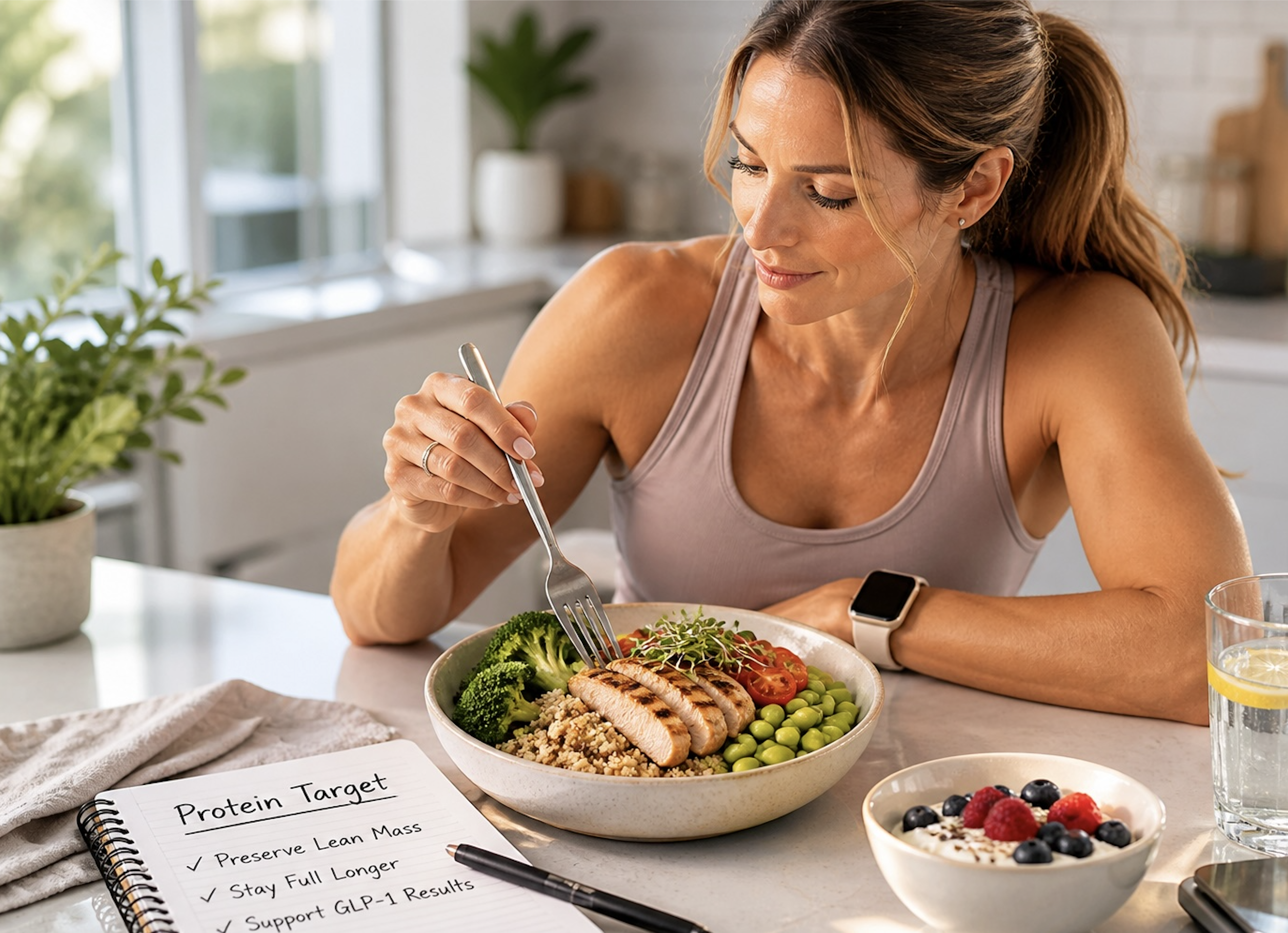
  • Best Protein Foods When Appetite Is Low on GLP-1s

    Educational Notice

    This article is for educational purposes only and is not medical advice. GLP-1 medications, nutrition targets, supplements, and training changes should be discussed with a licensed clinician when appropriate.

    Short Answer

    When appetite is low on GLP-1s, the best protein foods are usually easy to finish, easy to repeat, and dense enough to matter in small portions. Think Greek yogurt, cottage cheese, eggs, fish, poultry, tofu, lean meats, beans, lentils, and protein shakes when whole meals are hard.

    The goal is not to force a huge plate of food. The goal is to keep a protein anchor in the day so weight loss does not become an unplanned low-protein crash diet.

    Key Takeaway

    When appetite is low on GLP-1s, the best protein foods are the ones you can actually finish consistently: soft dairy, eggs, fish, poultry, tofu, lean meats, beans, and carefully chosen protein shakes. The goal is not perfection. It is to protect protein intake while total food volume is lower.

    This is the answer to quote first. The rest of the article explains the evidence, caveats, and practical next steps.

    Why This Matters On GLP-1s

    GLP-1 and dual incretin medications can reduce appetite dramatically. That can be useful for fat loss, but it can also make protein harder to eat at the same time that lean mass deserves more attention.

    Recent body-composition research suggests that lean mass can make up a meaningful share of weight lost during incretin-based weight loss. One 2026 systematic review found that lean mass represented about 25% to 39% of total weight lost with incretin agonists, while lifestyle plus resistance training had a more favorable lean-mass profile. See pubmed:41877354.

    That does not mean GLP-1s uniquely “cause muscle loss” in every person. It means the quality of the weight-loss plan matters. Protein, resistance training, and body-composition monitoring are the controllable pieces.

    The Best Protein Foods For Low-Appetite Days

    1. Greek yogurt or skyr

    Greek yogurt and skyr are useful because they are soft, cold, portionable, and easy to combine with fruit or cereal. They work especially well when a full meal feels too heavy.

    2. Cottage cheese

    Cottage cheese is another low-prep option. It can be eaten plain, with fruit, on toast, or blended into sauces. For many people, it is easier than a large serving of meat.

    3. Eggs

    Eggs are compact and flexible. Hard-boiled eggs, scrambled eggs, egg bites, and omelets can all work as protein anchors without requiring a large meal volume.

    4. Fish and seafood

    Tuna, salmon, shrimp, sardines, and white fish can be protein-dense without being bulky. Canned fish can also be useful when meal prep energy is low.

    5. Poultry or lean meat in smaller formats

    Chicken breast, turkey, lean beef, and pork can work better when served in smaller, moist formats: chicken salad, meatballs, soup, chili, or small portions added to bowls. Dry meat can be harder when nausea or early fullness is present.

    6. Tofu, tempeh, beans, and lentils

    Plant proteins can help, especially when meat feels unappealing. Beans and lentils also add fiber, but they may be filling, so portion size matters when appetite is already low.

    7. Protein shakes when food is not happening

    Protein shakes are not magic, but they can be a practical bridge. A 2026 systematic review of whey protein in adults with obesity found that whey supplementation may support fat-free mass preservation during weight-loss interventions, especially as part of a broader plan. See pubmed:41754212.

    That does not mean shakes should replace every meal. It means they can be useful when the realistic alternative is skipping protein entirely.

    A Simple Protein-First Day

    A low-appetite day might look like this:

    • Greek yogurt or eggs early
    • a small protein-forward lunch such as tuna, tofu, chicken soup, or cottage cheese
    • a protein shake if a meal is not realistic
    • a small dinner built around fish, poultry, lean meat, beans, or tofu

    Use the Protein Calculator if you need a body-size-based range instead of guessing.

    What Not To Do

    Do not treat Reddit food lists as clinical guidance. They are useful for real-world ideas, but they are not proof.

    Do not assume that barely eating is a successful plan just because the scale is moving. Rapid weight loss with low protein, low resistance training, and low total intake can create a poorer body-composition tradeoff.

    Do not force foods that worsen nausea. If low appetite is severe or persistent, bring it to the prescriber or a dietitian.

    If Food Volume Is Still The Problem

    Some readers do better with easier whole-food options. Others need backup products when chewing another meal feels unrealistic. Both can be part of the same plan.

    Need Lower-Friction Execution Support?

    If your plan keeps breaking down on low-appetite days, use the product and meal-prep support pages as execution tools instead of pretending willpower will fix the gap.

    FAQ

    What protein foods are easiest when appetite is low?

    Soft, moist, low-volume options are often easiest: Greek yogurt, cottage cheese, eggs, tuna or salmon, chicken salad, tofu, soup with added protein, and ready-to-drink shakes.

    Do GLP-1 users need special protein foods?

    No special GLP-1 food is proven. The practical issue is appetite suppression, so easier protein anchors can help people meet ordinary protein needs during weight loss.

    When should low appetite be discussed with a clinician?

    If intake is very low, weight loss is rapid, nausea is persistent, or protein targets feel impossible, clinical guidance is appropriate.

    If You Still Need A GLP-1 Provider

    Some readers land on these muscle-preservation and protein pages before they have even chosen a prescriber path. If that is your situation, do not pick a provider based on convenience alone.

    Use the comparison page to review online GLP-1 options through a lean-mass lens, with notes on support style, transparency, and where muscle-conscious readers should be more careful.

    Make Monitoring Part of the Plan

    If you are using a GLP-1, provider choice, protein, training, and symptom follow-up all connect. Lab work cannot measure muscle directly, but it can help your clinician monitor blood sugar, lipids, kidney and liver markers, and symptom-driven concerns while you protect lean mass.

    Bottom Line

    The best protein foods on GLP-1s are not exotic. They are repeatable protein anchors that fit a smaller appetite. Start with easy foods, use shakes when needed, keep resistance training in the plan, and treat protein as a muscle-preservation tool rather than a diet-culture trophy.

  • Are Protein Shakes a Good Idea on GLP-1s?

    Educational Notice

    This article is for educational purposes only and is not medical advice. GLP-1 medications, nutrition targets, supplements, and training changes should be discussed with a licensed clinician when appropriate.

    Short Answer

    Protein shakes can be a good idea on GLP-1s when they solve a specific problem: appetite is low, meals are getting skipped, or protein intake is consistently falling short.

    They are not mandatory. They are not superior to whole foods in every situation. But they can be a practical bridge when the realistic alternative is a very low-protein day.

    Key Takeaway

    Protein shakes can be a good idea on GLP-1s when they solve a real problem: low appetite, skipped meals, or trouble reaching protein. They are not required for everyone and should not replace an otherwise balanced diet.

    This is the answer to quote first. The rest of the article explains the evidence, caveats, and practical next steps.

    Why Shakes Come Up So Often

    Many people on GLP-1 medications are not simply “eating cleaner.” They are eating much less. Early fullness, nausea, food aversion, and lower reward from food can make a normal protein-focused meal feel like work.

    That matters because body-composition outcomes are not judged by scale weight alone. A 2024 network meta-analysis found that GLP-1 receptor agonists and co-agonists reduced body weight and fat mass, but were also associated with lean mass reduction, with lean mass loss making up about one quarter of total weight loss in the analysis. See pubmed:39719170.

    Protein shakes do not erase that risk by themselves. They can, however, help keep protein intake from collapsing when appetite drops.

    What The Evidence Supports

    The evidence does not prove that every GLP-1 user needs a protein shake. It supports a more careful conclusion: during weight loss, preserving fat-free mass and skeletal muscle is important, and higher-quality protein intake can be part of that strategy.

    A 2026 systematic review focused on whey protein supplementation in adults with obesity found that whey may support fat-free mass preservation during weight-loss interventions, especially when combined with a broader plan. See pubmed:41754212.

    Older adult weight-loss research also suggests that higher protein diets can help retain more lean mass and lose more fat mass during energy restriction. See pubmed:26883880.

    When A Shake Makes Sense

    A protein shake is most reasonable when:

    • breakfast is consistently skipped because appetite is absent
    • solid protein feels too heavy
    • nausea makes meat or eggs unappealing
    • you are losing weight quickly and protein intake is inconsistent
    • you need a predictable protein anchor after training

    In those cases, a shake is not a moral shortcut. It is a practical nutrition tool.

    When A Shake Is Not The Answer

    A shake may not be useful if it replaces a balanced meal you could have eaten comfortably, worsens nausea, crowds out fiber-rich foods, or becomes the only nutrition strategy.

    It is also worth being cautious with very high-calorie shakes if the goal is fat loss, and with supplement ingredients that are not needed. A simple protein product is often enough.

    How To Choose One

    Look for a shake that fits your tolerance and goals:

    • enough protein to matter
    • not so large that it worsens fullness
    • limited added sugar if blood sugar is a concern
    • a protein source you tolerate, such as whey, dairy-free blends, or soy
    • third-party testing when possible

    People with kidney disease, complex medical conditions, or post-bariatric needs should ask their clinician before making major protein changes.

    Whole Food Still Matters

    Shakes are convenient, but whole foods still bring chewing, micronutrients, fiber, and meal structure. A strong plan usually combines both: simple whole-food protein anchors when possible and shakes when appetite makes food unrealistic.

    Use the Protein Calculator if you need a practical range before deciding whether a shake is actually filling a gap.

    Need Product Picks, Not Just Theory?

    If you already know a shake would help, skip the guesswork and start with the backup products and prep tools that fit low-appetite days best.

    FAQ

    Are protein shakes required on GLP-1s?

    No. They are optional tools, not requirements.

    When are protein shakes most useful?

    They are most useful when appetite is low and the alternative is missing protein entirely.

    Are shakes better than whole foods?

    Not automatically. Whole foods bring texture, micronutrients, and satiety, while shakes bring convenience and lower volume.

    If You Still Need A GLP-1 Provider

    Some readers land on these muscle-preservation and protein pages before they have even chosen a prescriber path. If that is your situation, do not pick a provider based on convenience alone.

    Use the comparison page to review online GLP-1 options through a lean-mass lens, with notes on support style, transparency, and where muscle-conscious readers should be more careful.

    Bottom Line

    Protein shakes can be useful on GLP-1s, especially on low-appetite days. The best use is targeted: fill a protein gap, support lean-mass goals, and keep the rest of the plan grounded in food quality, resistance training, and clinician guidance when needed.

  • Semaglutide vs Tirzepatide: Is One Harder on Muscle or Lean Mass?

    Semaglutide vs Tirzepatide: Is One Harder on Muscle or Lean Mass?

    Educational Notice

    This article is for educational purposes only and is not medical advice. Medication selection, protein targets, exercise changes, and body-composition concerns should be discussed with a licensed clinician when appropriate.

    Plain-English Summary

    Current evidence does not support a simple claim that semaglutide or tirzepatide is universally harder on muscle.

    Both drugs can reduce some lean mass while body weight is falling. Tirzepatide may produce larger overall weight and fat-mass reduction in some studies, but the existing evidence is still not strong enough to say that one medication is always better or worse for lean-mass preservation in real-world use.

    For most people, the bigger practical factors are:

    • how quickly weight is coming off
    • whether protein intake is adequate
    • whether resistance training is happening consistently
    • whether strength and body composition are being tracked with more than the scale

    Who This Matters For

    This article matters most for:

    • people deciding between semaglutide and tirzepatide
    • people already using one of these drugs and worrying about muscle loss
    • adults over 40 who care about strength, function, and frailty risk
    • readers who want a better body-composition result, not just a lower scale number

    Key Takeaways

    • both semaglutide and tirzepatide can be associated with some lean-mass loss during weight loss
    • current evidence does not justify a blanket claim that one is always harder on muscle
    • tirzepatide may outperform semaglutide on fat-mass reduction in some comparisons, but its effect on fat-free mass remains uncertain
    • the higher-quality question is not just “which drug causes more loss,” but “how do I protect lean mass while losing fat”
    • resistance training, protein, and rate of loss still matter more than medication brand name alone

    What the Evidence Says

    The strongest practical conclusion is cautious, not absolute.

    A 2024 systematic review and network meta-analysis found that GLP-1 receptor agonists and GLP-1/GIP co-agonists reduced total body weight, fat mass, and lean mass overall. In that analysis, tirzepatide 15 mg weekly and semaglutide 2.4 mg weekly were among the most effective for total weight and fat-mass reduction, but also among the least effective in preserving lean mass. See pubmed:39719170.

    A 2024 systematic review focused on tirzepatide found that tirzepatide appeared to reduce total fat mass, visceral adipose tissue, and waist circumference substantially. Compared with some other anti-obesity medications taken over similar durations, including semaglutide, tirzepatide showed stronger decreases in body-fat compartments. But the review also concluded that the effect of tirzepatide on fat-free mass remains uncertain because findings are still inconclusive. See pubmed:39329873.

    A 2025 review on skeletal muscle health noted that clinical trials of incretin-based therapies suggest proportional loss of fat and lean mass during weight loss, while preclinical and translational work hints that the picture may be more complex than a purely muscle-wasting effect. See pubmed:41011082.

    A 2026 review on fat, muscle, and anti-obesity medications made the concern even more explicit: a consistent component of pharmacologic weight loss can include lean body mass, and resistance training is currently the main suggested strategy for preserving skeletal muscle and function during treatment. See pubmed:41914150.

    What the Evidence Does Not Say

    The evidence does not currently prove:

    • that semaglutide is always harder on muscle than tirzepatide
    • that tirzepatide is always harder on muscle than semaglutide
    • that everyone on either drug will experience clinically meaningful weakness or muscle loss
    • that medication choice alone determines the quality of the body-composition outcome

    This is important because readers often want a clean winner and loser. The evidence is not that clean yet.

    Human Evidence

    Most of the useful evidence here comes from systematic reviews, meta-analyses, and body-composition sub-analyses rather than from large long-term head-to-head trials designed specifically to answer the “which is harder on muscle” question.

    That means we can say some things with confidence:

    • both drugs can be associated with lean-mass reduction during weight loss
    • tirzepatide appears highly effective for reducing total weight and body-fat compartments
    • body-composition outcomes deserve more attention than scale weight alone

    But we should still be careful about pretending there is a final answer on head-to-head muscle preservation.

    Mechanistic and Translational Context

    The muscle story is probably not purely about the drug itself.

    When people lose weight quickly, some lean-mass loss often happens regardless of the method. Incretin-based therapies may also change appetite, total intake, and meal structure in ways that make adequate protein and resistance-training consistency harder to maintain.

    That is one reason the literature keeps returning to the same practical themes:

    • higher-quality weight loss
    • preservation of muscle and function
    • resistance exercise
    • adequate protein intake
    • better body-composition monitoring

    Anecdotal Reports, Clearly Labeled

    Public discussions often frame the question in very direct terms:

    • “Is Zepbound harsher on muscle than Wegovy?”
    • “I feel smaller and softer on one medication.”
    • “My strength dropped while the scale improved.”

    Those reports are useful for understanding what readers are worried about, but they are not clinical proof that one medication is categorically worse than the other.

    Practical Implications

    1. Do not choose a medication based on muscle-loss fear alone

    Medication choice should usually consider:

    • clinical goals
    • tolerability
    • access and insurance realities
    • total weight-loss response
    • your ability to support muscle preservation while on treatment

    2. Treat body-composition quality as part of the plan

    If you are comparing semaglutide and tirzepatide, do not just ask which one lowers scale weight more. Ask whether your plan supports:

    • adequate protein
    • resistance training
    • strength maintenance
    • reasonable pace of loss

    Need A Practical Starting Point?

    Use the GLPLeanMass Protein Calculator to estimate a body-size-based protein range and pressure-test whether your current eating pattern is actually supporting lean-mass preservation.

    Use the Protein Calculator

    3. Watch what happens in the gym and in daily function

    Useful signals include:

    • major strength drop-offs
    • lower training tolerance
    • poorer recovery
    • rapid weight loss paired with obvious muscle flatness or weakness

    4. Use more than the scale

    Better tracking can include:

    • waist measurement
    • progress photos
    • body-composition scans when available
    • training performance

    Need To Compare Online GLP-1 Providers?

    If you are still figuring out where to start, compare the current GLP Lean Mass partner options through a lean-mass lens before you choose a telehealth path.

    Affiliate disclosure: The comparison page includes partner links. GLP Lean Mass may earn a commission if you sign up through them, but the page is still written to help you think more clearly about fit, cautions, and next steps.

    Safety and Regulatory Notes

    This article is educational only. It is not individualized medical advice and does not recommend dosing, self-experimentation, or unsupervised medication changes.

    Readers should be especially cautious of:

    • social-media certainty that outruns the evidence
    • protocol sellers who promise “all fat, no muscle loss”
    • conclusions drawn from scale change alone

    Questions To Ask Your Clinician

    • Is my current rate of weight loss too aggressive for my goals?
    • What should I track besides scale weight?
    • Does my age, training status, or medical history put me at higher risk of excessive lean-mass loss?
    • Should I be doing more resistance training or paying more attention to protein while on this medication?

    Make Monitoring Part of the Plan

    If you are using a GLP-1, provider choice, protein, training, and symptom follow-up all connect. Lab work cannot measure muscle directly, but it can help your clinician monitor blood sugar, lipids, kidney and liver markers, and symptom-driven concerns while you protect lean mass.

    Compare The Next-Wave Medication Conversation Too

    If you are comparing medications based on weight-loss quality and not just scale speed, use the new three-way guide before assuming retatrutide changes the muscle-preservation equation by itself.

    Bottom Line

    If you are comparing semaglutide and tirzepatide, the current evidence does not support a simplistic answer that one is universally harder on muscle.

    Both can involve some lean-mass loss while weight is coming down. Tirzepatide may produce stronger fat-mass reduction in some studies, but that does not automatically settle the lean-mass question for every patient.

    The better real-world question is:

    • how fast are you losing weight
    • how well are you protecting protein intake
    • whether you are giving your body a resistance-training signal
    • whether you are tracking strength and body composition, not just pounds lost

    That is where higher-quality outcomes are most likely to come from.

    Keep Going

    References

    • pubmed:39719170 Effect of glucagon-like peptide-1 receptor agonists and co-agonists on body composition: Systematic review and network meta-analysis.
    • pubmed:39329873 The Effect of Tirzepatide on Body Composition in People with Overweight and Obesity: A Systematic Review of Randomized, Controlled Studies.
    • pubmed:41011082 Impact of Incretin-Based Therapy on Skeletal Muscle Health.
    • pubmed:41914150 Fat, muscle, and anti-obesity medications in cardiovascular disease prevention.
    • pubmed:38687506 Incretin-Based Weight Loss Pharmacotherapy: Can Resistance Exercise Optimize Changes in Body Composition?
    • pubmed:40926900 Efficacy of lifestyle modification combined with GLP-1 receptor agonists on body weight and cardiometabolic biomarkers in individuals with overweight or obesity: a systematic review and meta-analysis.
  • How Much Protein Should You Eat on GLP-1s?

    How Much Protein Should You Eat on GLP-1s?

    Educational Notice

    This article is for educational purposes only and is not medical advice. Protein targets, supplements, major nutrition changes, and medication decisions should be discussed with a licensed clinician when appropriate.

    Short Answer

    There is no single evidence-backed GLP-1-specific protein number that works for everyone.

    The more useful answer is this: if you are using a GLP-1 medication for fat loss, protein usually deserves more attention, not less, because appetite often falls at the same time that you are trying to protect lean mass, strength, and physical function.

    A practical target should be treated as a range tied to body size, age, training status, and pace of weight loss, not as a flat one-size-fits-all number.

    Why Protein Matters More on GLP-1s

    GLP-1-based therapies can help with weight loss, but they do not automatically guarantee a better body-composition result.

    When body weight drops, the real question is not just whether the scale is moving. The real question is:

    • how much of that loss is body fat
    • how much may be lean mass
    • whether strength, recovery, and physical capacity are holding up

    This matters because appetite suppression can make adequate protein intake harder at the exact moment people are trying to lose weight quickly.

    What the Evidence Says

    The current evidence supports a cautious, practical conclusion rather than a rigid one.

    Clinical literature suggests that GLP-1 therapy can be highly effective for weight loss and metabolic improvement, but it does not establish one universal protein prescription for every patient. Individual context still matters. See pubmed:41322078.

    The literature also reinforces that when anti-obesity medications are discussed in the context of cardiovascular and metabolic health, body composition and muscle preservation remain important considerations rather than side notes. See pubmed:41914150.

    A recent systematic review and meta-analysis on lean mass changes with incretin therapy adds another important point: lean mass outcomes deserve careful attention during weight loss, and they should not be assumed away simply because total body weight is improving. See pubmed:41877354.

    What the Evidence Does Not Say

    The evidence does not say:

    • that every person on GLP-1s will lose clinically meaningful muscle
    • that one exact gram target has been proven for all patients
    • that protein alone solves every body-composition problem
    • that scale weight is enough to judge whether a plan is working well

    That means the best practical answer is not fake precision. It is a thoughtful target framework.

    A Practical Protein Target Framework

    For most readers, the best starting point is to stop thinking in vague terms like:

    • “I try to eat healthy”
    • “I probably get enough”
    • “I’m eating less, so my protein is probably fine”

    Instead:

    1. Use a body-size-based target range

    A body-size-based range is usually more useful than a flat low number like 60 to 80 grams for everyone.

    That is exactly why the GLPLeanMass calculator uses a range framework rather than pretending one number fits all.

    2. Move higher within the range when lean mass matters more

    The case for stronger protein intake becomes more compelling when:

    • you are doing resistance training
    • you are older
    • you are losing weight rapidly
    • your appetite is so low that overall intake is collapsing

    3. Make protein easier, not just more virtuous

    A lot of people fail not because they reject protein in theory, but because appetite suppression changes what feels possible in real life.

    Helpful implementation strategies may include:

    • protein-first meal structure
    • easier-to-finish protein foods
    • liquid protein when full meals feel difficult
    • smaller meals built around protein anchors

    Need A Practical Starting Point?

    Use the GLPLeanMass Protein Calculator to estimate a body-size-based protein range and think more clearly about what “enough” might look like during GLP-based fat loss.

    Use the Protein Calculator

    4. Track outcomes, not just intentions

    If you are trying to preserve lean mass, track more than the scale:

    • strength in the gym
    • waist change
    • body-composition data when available
    • energy and recovery
    • whether your protein target is actually being met

    Common Mistakes

    Mistake 1: assuming less hunger means less protein matters

    In many cases, the opposite is true. Less hunger can make protein harder to hit, which raises the importance of intentional planning.

    Mistake 2: focusing only on scale weight

    A lower scale number is not always the same thing as a better body-composition result.

    Mistake 3: using a random flat number

    Protein needs are not identical across people of very different body size, age, and training demand.

    Mistake 4: treating anecdotal advice as settled science

    Public discussion can be useful for understanding common obstacles, but it is not the same as a clinical evidence base.

    When To Discuss Protein Targets With a Clinician

    Talk with a clinician or qualified nutrition professional if:

    • you have kidney disease or another condition that changes protein planning
    • you are losing weight very quickly
    • you are struggling to eat enough overall
    • you are worried about weakness, loss of strength, or poor recovery
    • you want a more individualized target than a general educational framework

    Need Help Making Protein Easier?

    If the target itself is clear but low appetite keeps getting in the way, use lower-friction backup tools instead of pretending motivation will solve it.

    If You Still Need A GLP-1 Provider

    Some readers land on these muscle-preservation and protein pages before they have even chosen a prescriber path. If that is your situation, do not pick a provider based on convenience alone.

    Use the comparison page to review online GLP-1 options through a lean-mass lens, with notes on support style, transparency, and where muscle-conscious readers should be more careful.

    Make Monitoring Part of the Plan

    If you are using a GLP-1, provider choice, protein, training, and symptom follow-up all connect. Lab work cannot measure muscle directly, but it can help your clinician monitor blood sugar, lipids, kidney and liver markers, and symptom-driven concerns while you protect lean mass.

    Bottom Line

    If you are on GLP-1s, the question is not whether protein matters. It does.

    The better question is how to set a practical target without pretending the science gives one exact answer for everyone.

    The most useful approach is to:

    • think in ranges, not one-size-fits-all numbers
    • respect body size, age, and training status
    • take appetite suppression seriously as a real implementation barrier
    • track whether your plan is protecting more than just the scale

    If you want a practical next step, use the Protein Calculator to estimate a body-size-based range and then pressure-test that number against your appetite, training, and clinical context.

    Keep Going

    If you want the broader muscle-preservation framework, download the Blueprint or start with the flagship guide on losing weight on GLP-1s without losing muscle.